To summarise my knowledge of info-graphics so far, it is a graphic (picture) that displays information. I found this part of the course quite fun and found that it suited my strengths well because I am a visual learner and I love it when the information is graphed into a picture.
For this task we were required to create an infographic using the easel website. I loved having various templates available to use. I found that this saved time creating an infographic and I was able to just change the wording and picures. The site was easy to navigate around too which was a bonus!
After seeing how simple it was to create an infograhic, I can see how it could be an excellent teaching instrument as well a vital tool for students. I believe it could be a great way to assess their knowledge of a subject that you are teaching. It will also appeal to them because you can use pictures, colours, shapes, fonts and different styled templates.
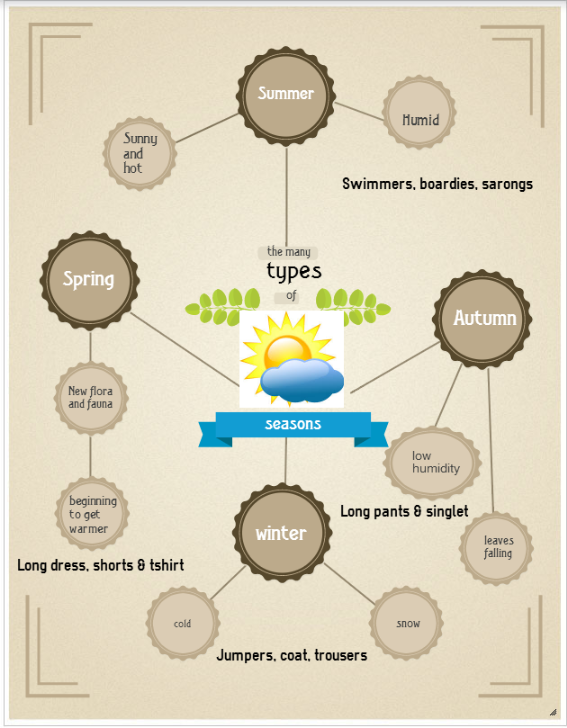
This was the infographic I created:
Sunday, 26 April 2015

Binary Numbers
After having a break from Uni and coming back to Binary numbers, I again was feeling very overwhelmed. When I was at school, I loved maths so I was finding that I was getting very disappointed in myself because I just wasn't getting it.
I took a break from my studies and came back to try the game that was provided to us on moodle again to see if I could understand it the second time round.
Binary Game
Finally after a bit of repetition I started to get it. The next step was to then design a binary game that I could teach to my students. I was still in the early stages of learning what binary numbers were so I decided to do some research into games that were already available to us. After some research, I found a game that I thought I could teach well to my students. I am a visual and practical learner myself, so the reason I chose this game was because it is something you can do with your hands.
Lesson: Bits and Binary
Materials
I took a break from my studies and came back to try the game that was provided to us on moodle again to see if I could understand it the second time round.
Binary Game
Finally after a bit of repetition I started to get it. The next step was to then design a binary game that I could teach to my students. I was still in the early stages of learning what binary numbers were so I decided to do some research into games that were already available to us. After some research, I found a game that I thought I could teach well to my students. I am a visual and practical learner myself, so the reason I chose this game was because it is something you can do with your hands.
Lesson: Bits and Binary
Materials
- Your hand
- A pen
Procedure
- Hold up one hand with fingers out-stretched.
- Starting from left to right, write the numbers 16, 8, 4, 2 and 1 on your fingers. If you are holding up your left hand your thumb will be number 16 and your little finger will be number one and the reverse for your right hand.
- We are going to use these numbers to add up to the number 26.
- By holding up only your little finger on your left hand you have the number 1. Holding up only your ring finger you have the number two. To get number 3 you need to hold both your little and ring finger as 1 + 2 =3. To get the number twelve you hold up your index and middle fingers and leave the others down, 8 + 4 = 12.
- Apologize to anyone you made a rude gesture at and tell them math is always this much fun.
How does this relate to binary numbers?
- Looking at your hand imagine that when your fingers are curled down that fingers represent the value of zero. Standing up right your fingers represent the number one.
- So if all your fingers are curled down you would write your hand as 00000. If all your fingers are upright it would be 11111.
- Using your left hand, hold up only your little finger, curl down your thumb and the other three fingers. This is the number 1 and is written in binary code as 00001. We can see this because the first four fingers (including your thumb) are curled down and only the last finger is standing.
- The number 2 in binary code is 00010 because the ring finger is upright and the others are curled.
- How would you write the number 12? You would need the finger with the number 8 written on it and the finger with the number 4, 8 + 4 = 12. And therefore, the binary code is 01100 as the second and third fingers are upright. The number 16 is 10000.
On this website, it also provided a YouTube visual which was also shown to us on moodle. After I had played the game provided to us, did some research, the video started to make more sense as well.
Hopefully over the next few weeks of the course I will get a better understanding of binary numbers and it will sink in. I love that my mind is getting challenged again!
Reference-
Lord, M. (2011, December 4). Lesson: Bits and
Binary. Retrieved April 20, 2015, from eGFI Dream up the Future:
http://teachers.egfi-k12.org/bits-binary/
Monday, 20 April 2015
Final Reflection
I started off this subject a few weeks behind schedule and I
felt a lot of pressure to catch up and find myself a group to work with. I was
very close to dropping the subject when I received a call from Wendy Fasso. She
helped me to relax as she walked me through the steps I missed. I had a very
skeptical view on collaborative work from previous experiences, so I was very
nervous to say the least. I knew that if I wanted to become a teacher that
collaboration was a vital tool I needed to learn and that their insights could
offer me a wealth of knowledge. Lazear (1999) agrees by stating, “…mingling
with other insights and ideas, will lead a group to leaps in understanding that
would not have been possible for an individual.” My fear of working with others
was a barrier I needed to overcome.
A few days later and Kelvin asked me to
join their group.
Through this process, my opinions and thoughts have changed
dramatically. Our group has been supportive of each other from the start and it
was obvious that we all wanted to help each other succeed and get great results. I found there were challenges along the way whilst
working collaboratively but most of it was smooth sailing. The biggest
challenge for me personally was trying to stay on top of peer feedback so that
I was not letting other team members down. This was something that I saw all of
us struggling with. The encouraging thing about our team was that we were all
accepting of the fact that we had very different schedules, so we had to do the
best that we could in the time we had available. This is something I would
emphasise to my students in the classroom. Every student has a different way of
learning and different schedules outside of school and we should work together
to overcome these hurdles e.g. If a student was absent, take extra time to walk
them through what they had missed.
When I was first exposed to the “Design Cycle’, I was not
confident in the structure and I did not understand the importance of going
through all of the steps. By completing my design in stages, I became aware of
how vital each step was and how to use the process. The tools, formats and
activities provided to us on Moodle assisted me to complete each stage
confidently. To be able to see how everyone in my group was progressing on our
wiki page was beneficial because I was able to use that as a guide to how I was
tracking. In my classroom, I would use lots of visuals with my students and
break down the process into stages so that they understood what was expected of
them. I would also highlight what areas we were looking at in regards to the
Australian Curriculum e.g. Futures thinking, environmental impacts, sustainability
and safe disposal of wastes because this is of high importance through the
design cycle.
Through the steps of completing my design challenge, I
began to get a greater understanding of the subject and why technology is a crucial
subject in the school system. I learnt so many tools through the first 5 weeks
of the course that I would be able to use in the classroom e.g. twitter,
mindmaps, wikipages and blogs. I struggled to set up some of these learning
tools, but with the help of my peers and lecturers, I was able to stay on track
and learn some invaluable skills. What I learnt very quickly was that
technology is the way of the future and as teachers, it is best to embrace it
and go on the journey with your students. On the journey so far, I have had
lecturers and peers support me and I managed to complete tasks assigned to us.
Throughout the course about design technology, my mind has
opened up to the endless possibilities that await us using technology. I will utilise
the ‘Design Cycle’ tool and educate my students on how each design can help
make a difference in creating sustainable futures.
Reference:
Lazear, D. (1999) Eight
Ways of Knowing. Teaching for Multiple Intelligencies, Harker Brownlow
Education, Cheltenham.
Friday, 17 April 2015
Final Peer Assessment Feedback by new peer
This week I used the product analysis prompt cards and converted it into a table to give peer feedback to Tess. I loved looking at a fresh design and being able to help make comments on where I think she could improve. I found the questions in the prompt cards to be very similar to the evaluation from last week but at least I knew my feedback was going to be thorough for Tess.
Tess did the same for me. I really loved having fresh comments and a new opinion from another peer. It is so great that we are all working together so we can all get great results.
Peer Evaluation Process
This week I was able to evaluate my peer, Amy's work on her design so far. I used the template that was provided to us and found it very useful. I was able to make minor comments on how I believe she could possibly improve her design.
Through the wikis, I was also able to make positive comments about how well she had done and I believe this would have been a positive experience for her because it was encouraging to her.
I really appreciated receiving positive comments about my design as well from Kelvin. I know he was under a bit of pressure because he had a bit of catching up but he took the time to do it for me and it really helped. Through this process, I was able to make minor changes over time to improve my work.
Thanks Team!
Through the wikis, I was also able to make positive comments about how well she had done and I believe this would have been a positive experience for her because it was encouraging to her.
I really appreciated receiving positive comments about my design as well from Kelvin. I know he was under a bit of pressure because he had a bit of catching up but he took the time to do it for me and it really helped. Through this process, I was able to make minor changes over time to improve my work.
Thanks Team!
Reflection: Online Peer Assessment
This week I read the article by Lu and Law on the moodle site
in regards to Online Peer Assessment. It identified how teachers often consider
Peer Grading and Peer feedback to be the same thing. Before reading the
article, I had a hard time identifying the main difference as well. By the end,
I understood that peer grading and peer feedback are two forms of peer
assessment and they both have different outcomes.
Peer Grading-
Studies have shown that this process is valid and is a reliable approach. It involves applying criteria to certain grades in the form of assessment rubrics.
Assessment rubrics focus on what is important in the assignment and enhances students understanding of the topic.
The process of peer grading on students have been minimally researched even though it is effectively wide-used in Universities. It can be a time-consuming process but it can be beneficial because it encourages students to think critically.
Peer Feedback-
Through reports, researchers argue that peer feedback has a more positive effect on students learning compared to peer grading. This is because it allows peers to reflect on their strengths and weaknesses and give constructive feedback on how to improve their work.
Researchers argue that this process can be done through stages which make it time efficient and it is therefore less threatening to students.
Evaluation-
Overall, the peer grading process actually allows assessors to review their own performance on the class and the opportunity to improve their understanding of the rubric. Peer feedback evaluates the work of others through positive comments which will significantly effect the quality of project learning outcomes.
My Pedagogy-
I personally can see the benefits of using both forms of peer assessment and would try to use them both in the classroom. The reason I say this is because I love the idea of how peer grading allows me to see where I can improve rubrics and the way I teach in the classroom. Peer grading does allow for more bullying and a less positive approach in the classroom so I would definitely limit how much I used it.
At the start of this course I was very anti "Group work" because of past bad experiences I have had. Over the past few weeks though, I have noticed the benefits of using peer feedback. I have been blessed with an awesome group that has positively offered me suggestions and tips but also congratulating me on the hard work that I have put into my design process.
So when I will be teaching students, peer feedback will be a vital tool for me and I will explain to my students how it will give them confidence in their work and how it can help with critiquing their future work.
Reference-
Lu, J., Law, N. (2011). Online peer assessment: effects of cognitive and affective feedback. Springer Science & Business Media B.V. Retrieved from
http://ehis.ebscohost.com.ezproxy.cqu.edu.au/eds/pdfviewer/pdfviewer?sid=c62a6531-8289-459a-b4ff-98ef53a082c0%40sessionmgr110&vid=1&hid=117
http://ehis.ebscohost.com.ezproxy.cqu.edu.au/eds/pdfviewer/pdfviewer?sid=c62a6531-8289-459a-b4ff-98ef53a082c0%40sessionmgr110&vid=1&hid=117
Reflection: Futures approach to Design Technologies
A more in depth explanation of a futures approach was introduced to us this week and after watching the video by Leyla Acaroglu last week (which was quite overwhelming), I found myself relax a little more his week after reading some materials and watching the videos on moodle.
I found Wendy Fasso's points on Moddle to be quite helpful in seeing the breakdown of how we can take a futures approach:

From the breakdown shown above, it helped me realise the repercussions on society that could happen if we do not take a futures approach. We need to think about the effect the product will have on all the stakeholders involved as well as the immediate self and community.
When teaching my students, I would try to give them lots of everyday examples like Leyla gave in her TED talk. Leyla used a lot of detail in her explanation so to explain that to younger children, I would try to use lots of visuals to explain it to them (this is what I found helpful myself).
Sustainability is such a big factor in today's society so I would make it my mission to make sure every student was aware of that and help them to brainstorm ideas of how we could create something that will still be environmentally sustainable in the future.
I found Wendy Fasso's points on Moddle to be quite helpful in seeing the breakdown of how we can take a futures approach:
From the breakdown shown above, it helped me realise the repercussions on society that could happen if we do not take a futures approach. We need to think about the effect the product will have on all the stakeholders involved as well as the immediate self and community.
When teaching my students, I would try to give them lots of everyday examples like Leyla gave in her TED talk. Leyla used a lot of detail in her explanation so to explain that to younger children, I would try to use lots of visuals to explain it to them (this is what I found helpful myself).
Sustainability is such a big factor in today's society so I would make it my mission to make sure every student was aware of that and help them to brainstorm ideas of how we could create something that will still be environmentally sustainable in the future.
Week 4 Peer Evaluation Process
I am really loving how flexible and understanding our group is! We understand that we all have different commitments outside of University which means our schedules don't always line up. We don't expect everyone to be online at the same time to have a group discussion but we just message each other in a group chat and respond when we get the chance.
I love how we are always encouraging each other to stay on track and stick out the last few weeks of the course. Kelvin has done a great job at getting my peer evaluation done considering he has a baby on the way and I personally have really loved looking at everyone's designs so I can get tips on how to improve my own work.
I have loved working with this group for this subject.
I love how we are always encouraging each other to stay on track and stick out the last few weeks of the course. Kelvin has done a great job at getting my peer evaluation done considering he has a baby on the way and I personally have really loved looking at everyone's designs so I can get tips on how to improve my own work.
I have loved working with this group for this subject.
Reflection on my winning design
Week 4 consisted of completing my design process for my winning design which was the sustainable garden. I was really excited to post my final design to the wiki page so that I could get some thorough feedback from my peers.

Once I had finished going through the design process, I realised how valuable it can be as a tool. I was very happy with the layout and design of my garden as were my peers. I loved how the garden I designed had many opportunities for embedding sustainable practices as well as using recycled items, allowing for parent and community input and that it was also suitable for all ages.
Saturday, 4 April 2015
Reflection: Web 2.0 and classrooms
I thought this was an interesting read. I loved how the article started off by expressing why the design was important. For students to be creative, to have a degree of control over their own learning, to solve problems, to improve personal IT capability and to work cooperatively.
The reading outlined 3 beneficial factors, termed E's of web 2.0.
1. Enjoyable and exciting- Finding new ways to present ideas and share their efforts with a wide audience.
2. Energises learning- Through blogs and wikis, students can learn about IT's, computers and they can learn from each other in an exciting way. These ways allow for students to comment on each others work and give feedback.
3. Emancipatory- It is important to appreciate the potential of IT resources and keep an open mind to try new things. Technology has a huge amount of resources available to use that cannot always be found in the classroom.
Sharing ideas is a major feature of web 2.0. Collaborative processes allow for many different points of view and using online technologies allows students to express their thoughts in an enjoyable way.
The downside to using technology is internet safety. Teachers need to take the opportunity to educate students about internet safety and respect for friends, the classroom, the environment and communication.
Even though technology is still rapidly evolving and in some schools, resources are limited e.g. students have to share computers, I personally don't think it will be long before this won't be an issue in society. A lot of schools are already introducing laptops for each student in the secondary years and for the younger years, I think it is a vital skill for them to learn to work collaboratively with others so sharing computers isn't a huge issue in my opinion.
It is important for us as teachers to stay up to date with technology because it is the way of the future and students will use it a lot out of school as well. Therefor, teaching technology is a vital unit that needs to be used in the classroom.
Reference:
Younie, S., Leask, M., & Burden, K. (2015). Teaching and Learning with ICT in the Primary School (2nd ed.). Abingdon, Oxon & New York, NY: Routledge
The reading outlined 3 beneficial factors, termed E's of web 2.0.
1. Enjoyable and exciting- Finding new ways to present ideas and share their efforts with a wide audience.
2. Energises learning- Through blogs and wikis, students can learn about IT's, computers and they can learn from each other in an exciting way. These ways allow for students to comment on each others work and give feedback.
3. Emancipatory- It is important to appreciate the potential of IT resources and keep an open mind to try new things. Technology has a huge amount of resources available to use that cannot always be found in the classroom.
Sharing ideas is a major feature of web 2.0. Collaborative processes allow for many different points of view and using online technologies allows students to express their thoughts in an enjoyable way.
The downside to using technology is internet safety. Teachers need to take the opportunity to educate students about internet safety and respect for friends, the classroom, the environment and communication.
Even though technology is still rapidly evolving and in some schools, resources are limited e.g. students have to share computers, I personally don't think it will be long before this won't be an issue in society. A lot of schools are already introducing laptops for each student in the secondary years and for the younger years, I think it is a vital skill for them to learn to work collaboratively with others so sharing computers isn't a huge issue in my opinion.
It is important for us as teachers to stay up to date with technology because it is the way of the future and students will use it a lot out of school as well. Therefor, teaching technology is a vital unit that needs to be used in the classroom.
Reference:
Younie, S., Leask, M., & Burden, K. (2015). Teaching and Learning with ICT in the Primary School (2nd ed.). Abingdon, Oxon & New York, NY: Routledge
Friday, 3 April 2015
How I will deliver the Sustainability message to my students
Wow! I was amazed at the TED talk by Layla Acaroglu but also found it very overwhelming. It placed such an importance on identifying many different ways of doing things so we can start to innovate.
I enjoyed looking at the Life-cycle thinking that Layla was talking about. I loved how she quoted that "At every stage, there is an interaction with the environment." Through her explanation, it really opened my mind up to the life-cycle process.
Because I got so much more understanding out of the Life-cycle process, it would be something I would want to teach to my students as well. It is good for them to think about the life expectancy of the materials we use and how they will impact on our environment.

I love how everything she explained could be linked to what we have been taught in this course and that is exactly how I would teach it to my students. I would teach them how to use the Design Process, taking each step one at a time and explaining the benefits of the process.
I would put a high priority on teaching the students how important it is to embed sustainable practices into every design and to use sustainability as a parameter. I would then talk to them about how every decision we make has an impact on future generations.
By reflecting on each design process, we can work out what was beneficial and what wasn't. We can then come up with new strategies to improve designs and come up with innovative solutions.
I enjoyed looking at the Life-cycle thinking that Layla was talking about. I loved how she quoted that "At every stage, there is an interaction with the environment." Through her explanation, it really opened my mind up to the life-cycle process.
Because I got so much more understanding out of the Life-cycle process, it would be something I would want to teach to my students as well. It is good for them to think about the life expectancy of the materials we use and how they will impact on our environment.
I love how everything she explained could be linked to what we have been taught in this course and that is exactly how I would teach it to my students. I would teach them how to use the Design Process, taking each step one at a time and explaining the benefits of the process.
I would put a high priority on teaching the students how important it is to embed sustainable practices into every design and to use sustainability as a parameter. I would then talk to them about how every decision we make has an impact on future generations.
By reflecting on each design process, we can work out what was beneficial and what wasn't. We can then come up with new strategies to improve designs and come up with innovative solutions.
Subscribe to:
Comments (Atom)